
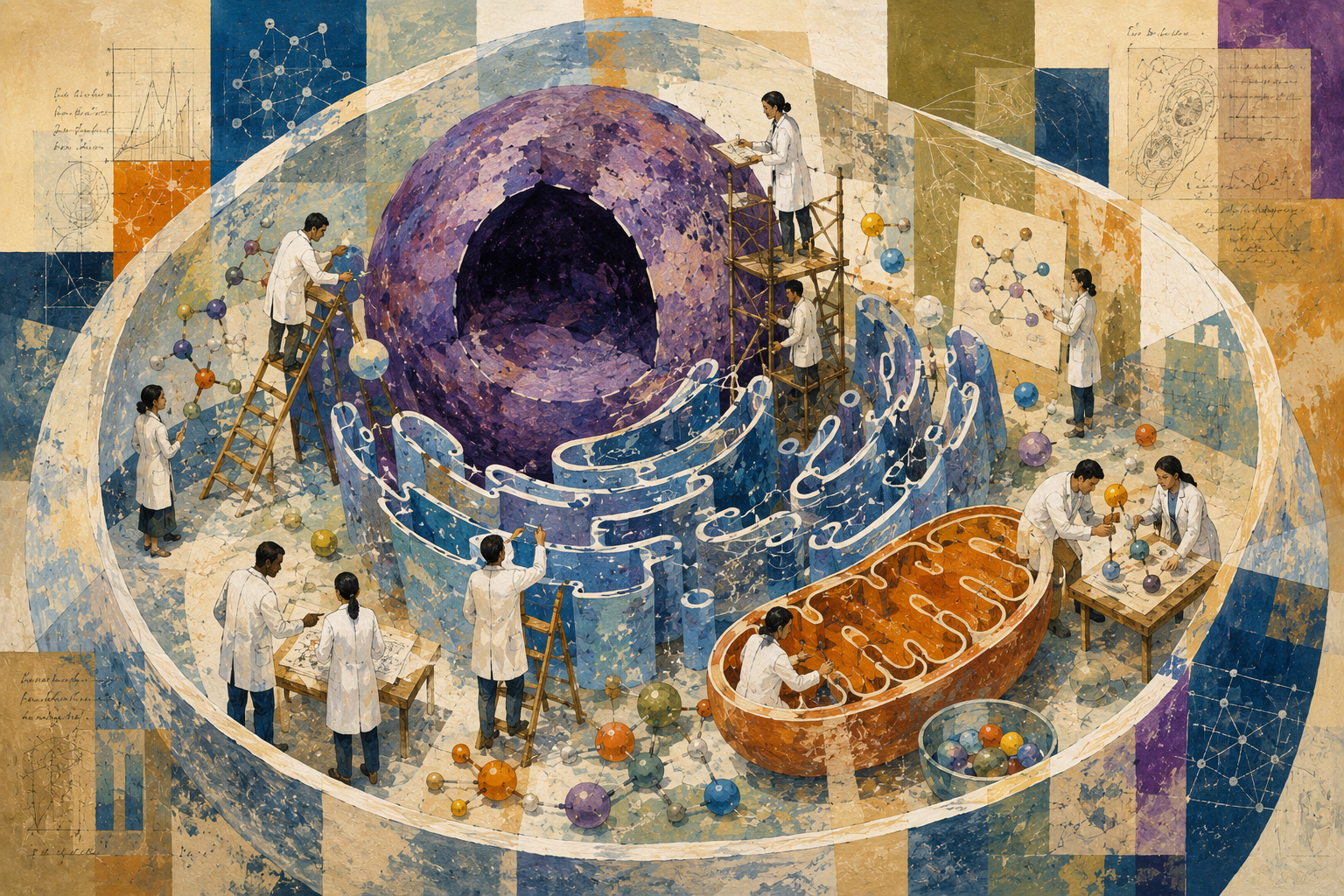
Life is a set of self-perpetuating chemical reactions. Somehow, out of that churning chemistry emerges a living cell, and out of trillions of cells emerges the person reading this.
At the Bailis Lab, that leap from chemicals to life is the question we care about most. We are all built from the food we eat, broken down and rebuilt into the material our cells use to grow and function. But long before cells ever learned to cooperate in bodies like ours, each one was already running its own economy: a set of ancient rules for balancing what it wants to do (grow, divide, survive) against the raw materials and machinery it has on hand.
We traditionally think of cell state (whether a cell is resting or active, dividing or dying, one lineage or another) as something written by signaling and gene regulation. Receptors relay information from the environment to the genome, transcription factors switch programs on and off, and the cell is instructed into its identity. This view, shaped by the “Central Dogma,” has driven most of modern biomedicine, and it is not wrong. A cell's genetic program is its strategic plan, but a plan is only as good as its logistics and support.
Every instruction a cell receives makes a demand: to proliferate, to differentiate, to function, to persist. Those demands are levied against much older systems. Before multicellular life existed, the goal of individual cells was to align growth and survival against the supply of nutrients and the cell's own capacity to build. The molecules of the Central Dogma (DNA, RNA, and protein) are themselves assembled from nucleic acids and amino acids that predate life itself. The rules governing how those building blocks are made, matched, and spent are woven into every layer of evolution; they set the boundaries of what a cell can actually do in real time.
Our work lives in the tension between these layers: the “modern” instructions that specialize a cell to serve the whole organism, laid on top of an ancient, self-interested economy that never stopped keeping its own books. Cell state, in our view, is not simply what the genome prescribes. It is what emerges when the demands of a lineage’s strategic plan meets the logistical constraints of a cell’s nutrient supply and biosynthetic capacity. When capacity comfortably meets demand, a cell can execute its program fully. When demand outpaces what the cell can build and sustain, the very same instructions can yield a completely different outcome. Fate, resilience, and dysfunction all live in that reconciliation.
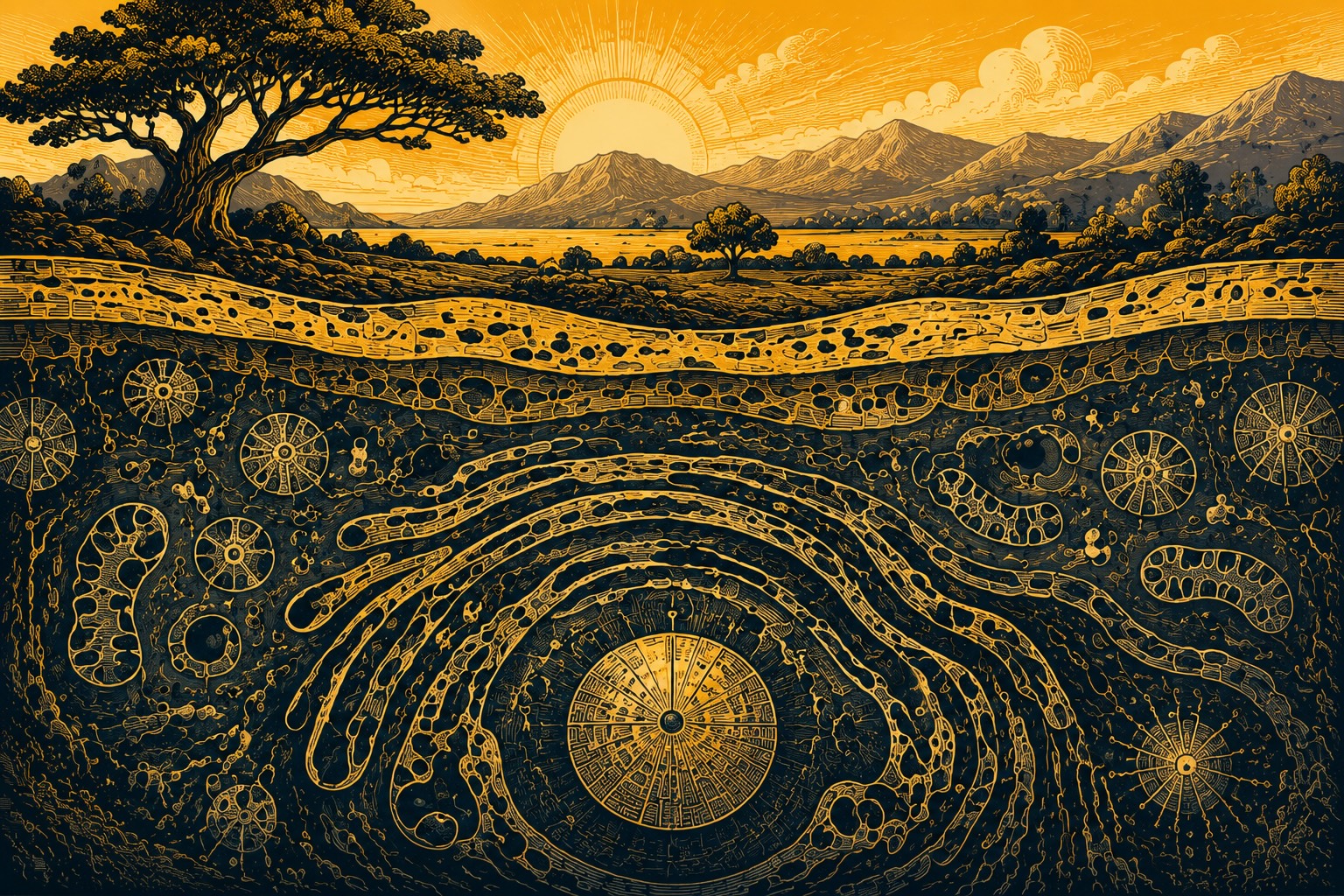
We believe this perspective helps explain why so many diseases resist simple genetic explanation, and it opens a different kind of therapeutic target. Rather than rewriting a cell's instructions, how can we change the terms of the negotiation: the environment a cell lives in and its capacity to meet what the body demands of it.